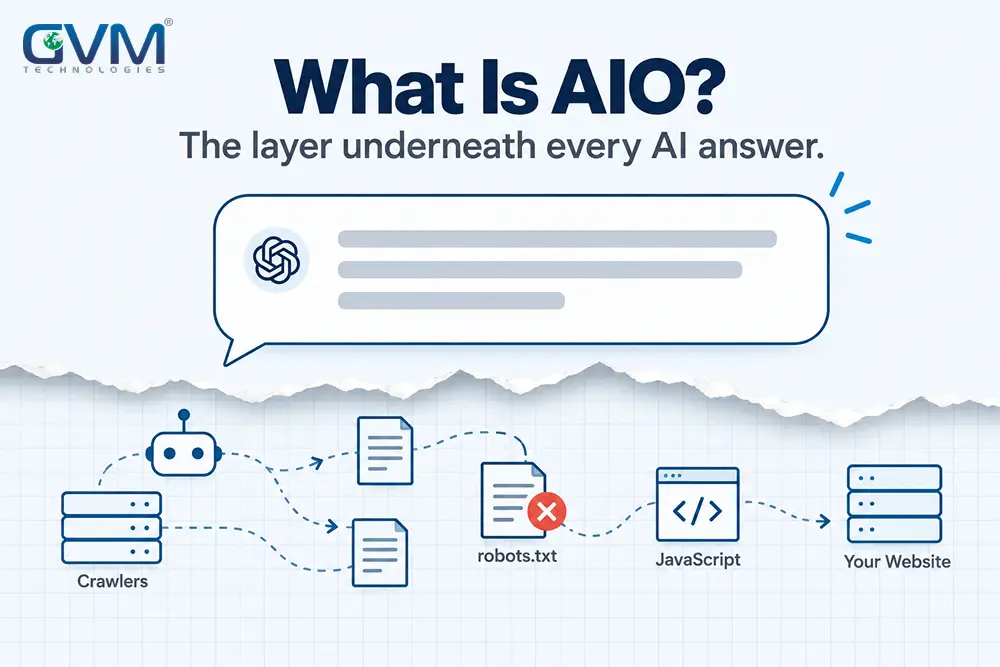
Quick Answer: AI optimization (AIO) is the technical work that lets AI systems access, read, and correctly understand your site: crawler access, structured data, and a site architecture built for machine readers, not only human visitors.
Nothing else works until that layer holds, not content, not citations, not entity work. GEO depends on the same foundation, which is exactly why the 2 terms blur together.
You will also see “AIO” used more narrowly, for ranking specifically inside Google’s AI Overview box. Both meanings are real, and this guide covers the technical layer underneath both.
Key Takeaways
- AI optimization (AIO) means the technical work that lets AI systems access, read, and understand your site, not a content strategy or a citation-tracking dashboard.
- 3 layers decide AI optimization readiness: crawl access, rendering, and structure. A 4th, entity consistency, is where it hands off to GEO.
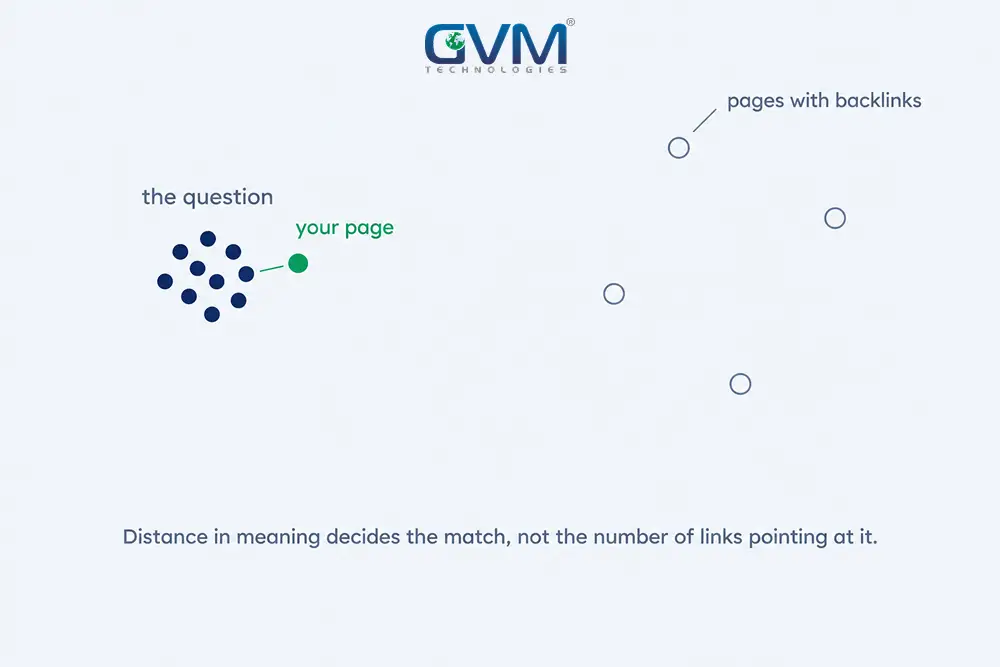
- AI systems retrieve by semantic match to the question, not by link count, so a clean, well-structured page can out-cite a heavily-linked one.
- Skipping a technical audit and going straight to content is the single most common gap we find in AI-optimization work.
- Passing the technical layer makes a page eligible for citation. It does not guarantee one, off-site signals still decide who wins.
- A guaranteed AI citation is a red flag, not a selling point, since no one controls a non-deterministic system.
What AI Optimization (AIO) Actually Means
GVM prices its own AI optimization work the way most practitioners now use the term: making a site legible to every AI system, not gaming one platform’s summary box.
The wider market has not settled on this yet, and mixing up the 2 meanings wastes budget.
The 2 meanings, side by side
| Meaning | What it targets | Who tends to use it this way |
|---|---|---|
| AI Overview Optimization | Ranking inside Google’s AI-generated summary box specifically | Vendors selling one Google-only feature |
| AI Optimization (this guide’s definition) | Crawl access, rendering, and structure, across every AI system | Practitioners, and how GVM prices its own AIO service |
This guide uses the second, broader definition throughout. If a provider pitches “AIO services,” ask which one they mean before signing anything.
AIO, AEO, and GEO in one pass
- AIO asks whether an AI system can reach, parse, and trust the page at all.
- AEO asks whether the page gets chosen as the short, direct answer.
- GEO asks whether the brand gets cited inside a longer, generated response.
The 3 overlap heavily in practice. The full GEO vs. AEO vs. SEO breakdown covers that comparison end to end. This piece stays on the layer underneath all 3.
Why the Technical Layer Comes First
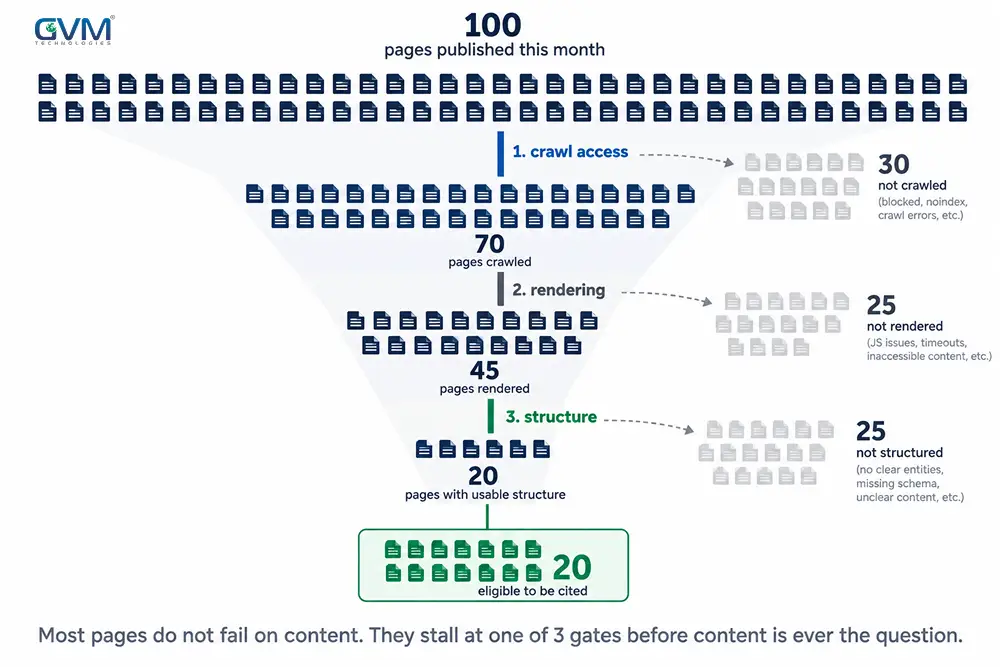
An AI system cannot cite a page it cannot fetch and read cleanly. That single fact is why AI optimization starts with 3 checkable layers, not a content brief.
| Layer | What it checks | What fails if it does not hold |
|---|---|---|
| 1. Crawl access | Can an AI crawler reach the page at all | The page is invisible, regardless of content quality |
| 2. Render and index | Does content actually load in the raw HTML | JavaScript-only content often reads as blank |
| 3. Structure and schema | Can a clean, standalone passage be lifted | Strong answers get buried and never quoted |
1. Crawl access
Robots.txt has to explicitly allow GPTBot, ClaudeBot, PerplexityBot, and Google-Extended. It is an honor-system request, not a lock, compliant crawlers respect it, but nothing technically forces a non-compliant one to.
- OpenAI alone runs 3 separate crawlers with different jobs: GPTBot trains on content, OAI-SearchBot builds ChatGPT’s live search index, and ChatGPT-User fetches a page live when someone clicks a citation.
- A site can allow search crawling while blocking training. Most AI optimization content treats “GPTBot” as the only one that matters and misses this entirely.
2. Render and index
AI systems generally read the raw HTML a page returns, not what a browser shows once JavaScript finishes running. Content that only appears after a script executes can be invisible to a crawler even though it looks complete to a visitor.
- Server-side rendering or static generation is the direct fix for any page meant to be an AI optimization priority.
- Bing indexation matters here too. A real share of what ChatGPT surfaces in search mode leans on Bing’s index, on top of its own crawler.
3. Structure and schema
AI systems pull short passages, not full pages. A passage earns reuse when its direct answer sits in the first sentence of a section and the section reads correctly on its own.
FAQPage schema still helps, but not for the reason most people assume. Google retired FAQ rich results in classic Search in May 2026, so a marked-up FAQ block no longer wins extra space on the results page.
It still gives an AI system a clean structure to parse. Treat it as an extraction aid, not a ranking tactic, and never swap it for QAPage, the schema meant for user-submitted questions.
Why Structure Beats Backlinks for AI Retrieval
Search engines and AI systems score content differently. That gap is why a lower-authority page can out-cite a bigger competitor.
Google’s ranking systems weigh backlinks and domain history heavily. AI retrieval weighs something else first: how closely your text matches the meaning of the question.
Retrieval systems convert the question and your content into numerical representations of meaning, then measure how close those sit to each other.
A clear, self-contained answer can match closely with zero backlinks. A page buried in scene-setting prose can match poorly even with a strong link profile.
| Signal | What decides a Google ranking | What decides an AI citation |
|---|---|---|
| Primary weight | Backlinks and domain authority | Semantic match to the question |
| Secondary weight | Engagement, historical trust | Passage clarity, corroboration |
| What it rewards | A well-linked page | A well-structured, standalone answer |
This is why a smaller site with tightly written answers regularly out-cites a bigger, better-linked competitor whose content was never written to be lifted out of context.
What Breaks When You Skip the Technical Layer
This is the most common pattern in an AI optimization audit that starts from zero. A site publishes strong content, adds an FAQ block, and starts tracking mentions across ChatGPT and Perplexity, then nothing moves.
- The content is rarely the actual problem.
- The crawler could not reach half the site’s key pages, or
- The pages it reached were still rendering client-side, invisible to anything that was not a browser running JavaScript.
We ran a full crawl-and-render audit before writing a single page for a commercial trucking insurance client. The technical gaps were larger than the content gaps, so crawl access came first.
The client case studies cover work built the same way, across insurance, real estate, and e-commerce.
The Technical-First AI Optimization Checklist
Work through this order before spending on content, schema wording, or a citation-tracking tool.
- Confirm robots.txt explicitly allows GPTBot, ClaudeBot, PerplexityBot, and Google-Extended.
- Load your top pages with JavaScript disabled and confirm real content still appears.
- Verify indexing in Bing Webmaster Tools, not only Google Search Console.
- Check Core Web Vitals against Google’s thresholds: LCP under 2.5 seconds, INP under 200 milliseconds, CLS under 0.1, at the 75th percentile.
- Confirm each section opens with a direct answer in its first sentence.
- Use FAQPage schema only for questions your own site wrote, never for user-submitted content.
- Match your business name, description, and facts across your site, listings, and reviews.
- Skip
llms.txtas a fix on its own. Current evidence shows no measurable citation effect from the file alone. - Re-run this checklist after any migration or redesign, since rendering can silently break during a rebuild.
Necessary, Not Sufficient: Where AIO Hands Off to GEO
Passing all 3 technical layers makes a page eligible to be cited. It does not make citation automatic.
Before repeating a claim about a business, an AI system checks whether the rest of the web agrees. That entity-consistency check is where GVM’s own service breakdown shifts from AI optimization work into GEO work.
- Your name, description, and core facts should read identically across your site, listings, and reviews.
- Recency outweighs volume. We have seen a business with hundreds of older reviews passed over for a competitor with a smaller, more recent set.
- A brand-new site can be technically flawless and still get skipped for an established competitor, simply because it has no off-site footprint yet to check against.
That gap closes with entity and off-site work, not more technical fixes on a site that already passes the audit.
How to Tell If an “AIO” Offer Skips the Technical Work
The market for “AI optimization” services is crowded, and quality varies widely.
A pitch that opens with a promised visibility score, before ever mentioning robots.txt, rendering, or Bing indexation, has usually skipped the layer that decides whether the rest of the work can succeed.
- What did you check first? A real audit names robots.txt, rendering, and indexation by name, not just “AI visibility.”
- What changes if my site is client-side-rendered? A provider who has not asked this has not actually audited a modern site.
- How will you prove the fix worked? A before-and-after crawl test beats a proprietary score you cannot verify yourself.
A guaranteed AI citation or ranking is a red flag, not a skill signal, since nobody controls what a non-deterministic system cites on a given run.
See our full agency due-diligence guide, or these 7 questions for hiring an AI SEO specialist, before you sign anything.
See exactly which layer is holding you back. GVM breaks its own AI optimization work into the same 3 checks this guide covers, priced line by line on our SEO, AEO, AIO, and GEO pricing page.
Book a free SEO and GEO audit for a straight read on your site before spending on anything else.
How Long the Technical Layer Takes to Fix
Robots.txt corrections and Bing submission can take effect within days. Rendering fixes depend on the build: a configuration change on an already-capable platform can ship in a week, a full move to server-side rendering takes several weeks.
Content and off-site entity work compounds over 2 to 4 months. Fixing the technical layer first is the fastest way to learn whether an AI system can see your site at all, before a much larger content budget gets spent chasing it.
FAQs
1. What does AIO stand for?
AIO stands for AI Optimization, the technical work that lets AI systems access, read, and understand a site. Some providers use it more narrowly, for ranking inside Google’s AI Overview box specifically, so confirm which meaning is meant before hiring for it.
2. Is AIO the same as AI Overview Optimization?
Not exactly. AI Overview Optimization targets one Google feature. AI optimization, as used here, covers crawl access, rendering, and structure across every AI system, including ChatGPT, Perplexity, and Google’s AI Overviews and AI Mode.
3. Is AIO the same as GEO or AEO?
They overlap but target different things. AIO is the readiness layer underneath both: can an AI system reach, parse, and trust the site at all. AEO targets being the short, direct answer. GEO targets being cited inside a longer response.
4. Why does technical SEO come before AIO content work?
An AI system cannot cite a page it cannot fetch and render cleanly. Crawl access and indexing gate everything built on top of them, including content, schema wording, and off-site mentions.
5. What technical fixes matter most for AI optimization?
In order: confirm robots.txt allows the major AI crawlers, verify content renders in raw HTML rather than only after JavaScript runs, confirm Bing indexation alongside Google’s, and keep business facts consistent everywhere they appear.
6. Do I need to rebuild my website for AIO?
Usually not. Most sites need targeted fixes: a robots.txt correction, a rendering fix for key pages, and consistency cleanup across listings. A full rebuild only applies when the whole site is client-side-rendered with no server-side fallback.
7. Can an agency guarantee my AI optimization results?
No. AI-generated answers are non-deterministic, meaning the same prompt can cite a different source on a different run of the same platform. A provider can fix the technical layer, but nobody controls what gets cited on a given run.
Conclusion
AI optimization is not one tactic, and it is not whatever a given provider decides to sell under that name. It comes down to 3 checkable layers, crawl access, rendering, and structure, plus the entity work that hands off to GEO once those 3 hold.
Skip that order and content work becomes a bet on a foundation nobody checked. Fix it first, and everything built afterward, content, schema, entity work, finally has a system that can actually see it.
GVM Technologies checks all 3 layers before recommending a single new page, priced the same way on its own SEO, AEO, AIO, and GEO pricing page.
One accountable team since 2012, ISO-certified, with named client work in insurance, real estate, and e-commerce. Get a free audit and see exactly where your own technical layer stands.